Waterloo Region · New Hamburg and Baden

Wilmot

The township west of Kitchener, where Highway 7/8 heads toward Stratford. Two main towns on the rail line, a handful of old villages, and good farmland all around.

Map of Wilmot: main roads and highways, rivers, parks, and a few landmarks. Each part of town in this guide is marked; choose one to jump to itWilmotNith River7/8New HamburgBadenSt. AgathaNew Dundee
Point to a part of town or a landmark, or tap itMap data © OpenStreetMap contributors
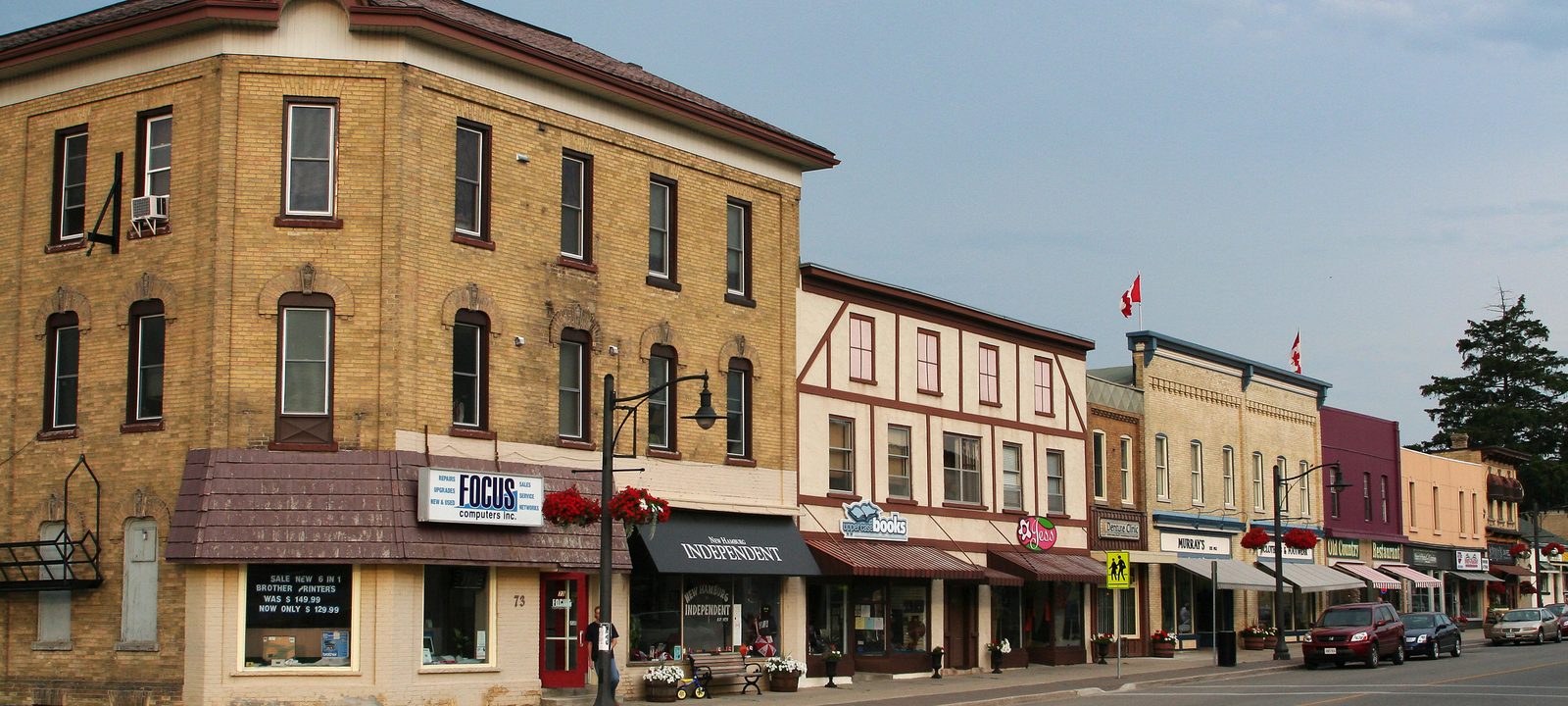
The main street of downtown New Hamburg, with two and three storey brick commercial buildings, awnings, and hanging flower baskets
Downtown New Hamburg, a heritage conservation district.
Photo: TheGiantVermin, CC BY-SA 3.0

About Wilmot

Wilmot runs west from the edge of Kitchener toward Perth County. It was a Crown reserve until a survey in 1824, when Mennonites from Waterloo Township and Amish families from Europe began to settle. Christian Nafziger, an Amish Mennonite born in Germany, prepared the first settlement. After 1828, Catholics and Lutherans from Alsace and Germany came, along with settlers from Britain, who took up land mostly in the southern third of the township.

Highway 7/8 crosses the township from east to west and bypasses the town centres to the south, while the CN main line runs straight through Baden and New Hamburg. VIA trains pass through without stopping, so most people drive to Kitchener for the GO train.

The township takes in New Hamburg, Baden, New Dundee, Petersburg, St. Agatha, Mannheim, and a scattering of crossroads and hamlets. The guide goes town by town.
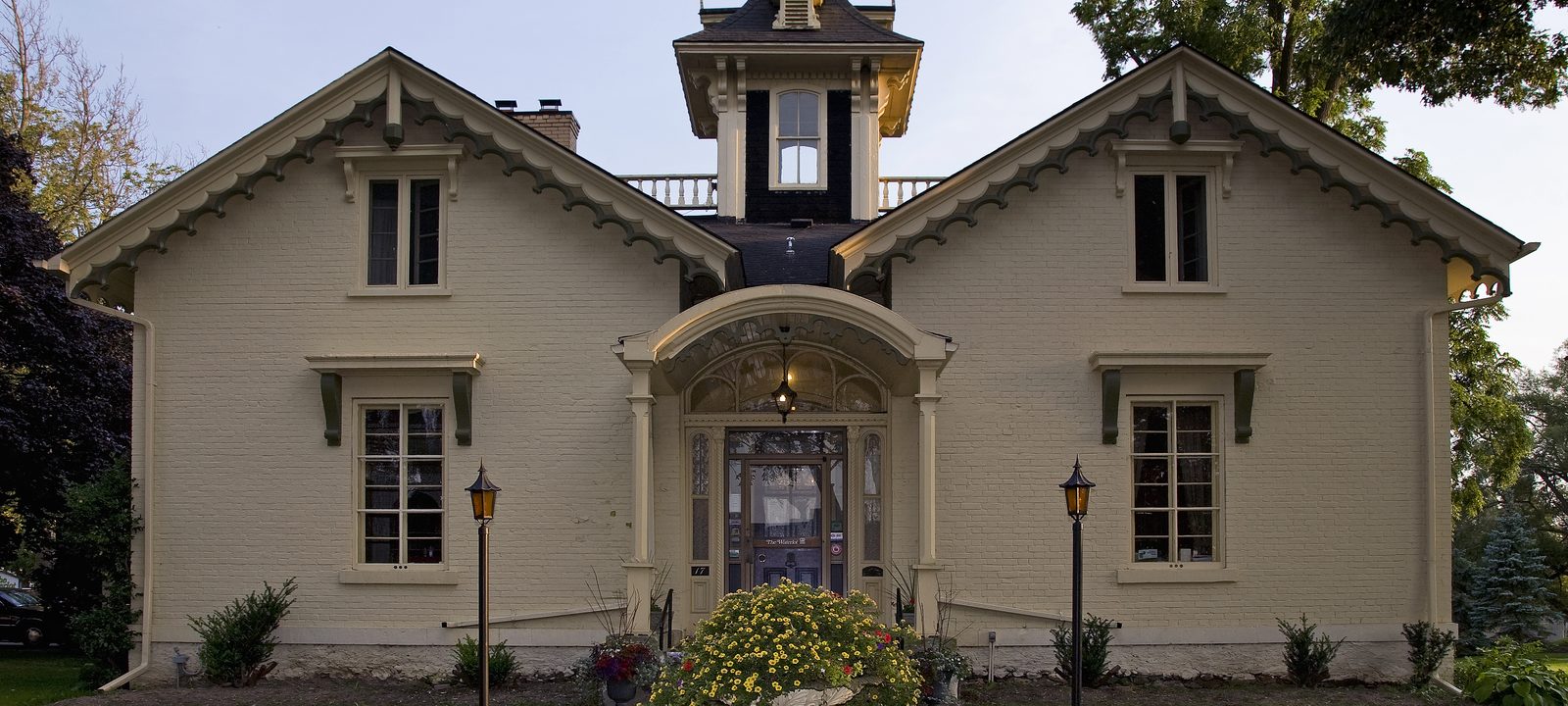
A pale one and a half storey Gothic Revival house with an ornate central gable and a fountain in front, on a green lawn in New Hamburg
The Waterlot on Huron Street, a brick house from 1847 that backs onto the Nith.
Photo: Ian Furst, CC BY-SA 3.0

On the Nith

New Hamburg

New Hamburg was laid out in 1832 on what was then called Smith’s Creek. Josiah Cushman, a millwright, dammed the creek and built the first sawmill. William Scott arrived in 1838, renamed the creek the Nith River, and built a new dam and mill, and he is remembered as the town’s founder. The town was called Cassel and then Hamburgh before settling on New Hamburg by 1840.

The Nith still winds through the middle of town. A large waterwheel has stood downtown since 1990; the wooden wheel came down in 2023 and was replaced by a metal copy. The downtown is a designated heritage conservation district, lined with brick storefronts.

Day to day

New Hamburg is the largest community in the township and has most of its shops and services. The library branch is on Huron Street, and the New Hamburg Community Centre on Jacob Street has a hall and an arena floor. The Wilmot Recreation Complex on Nafziger Road, between New Hamburg and Baden, has two arenas, two indoor pools, an indoor track, and sports fields around it.

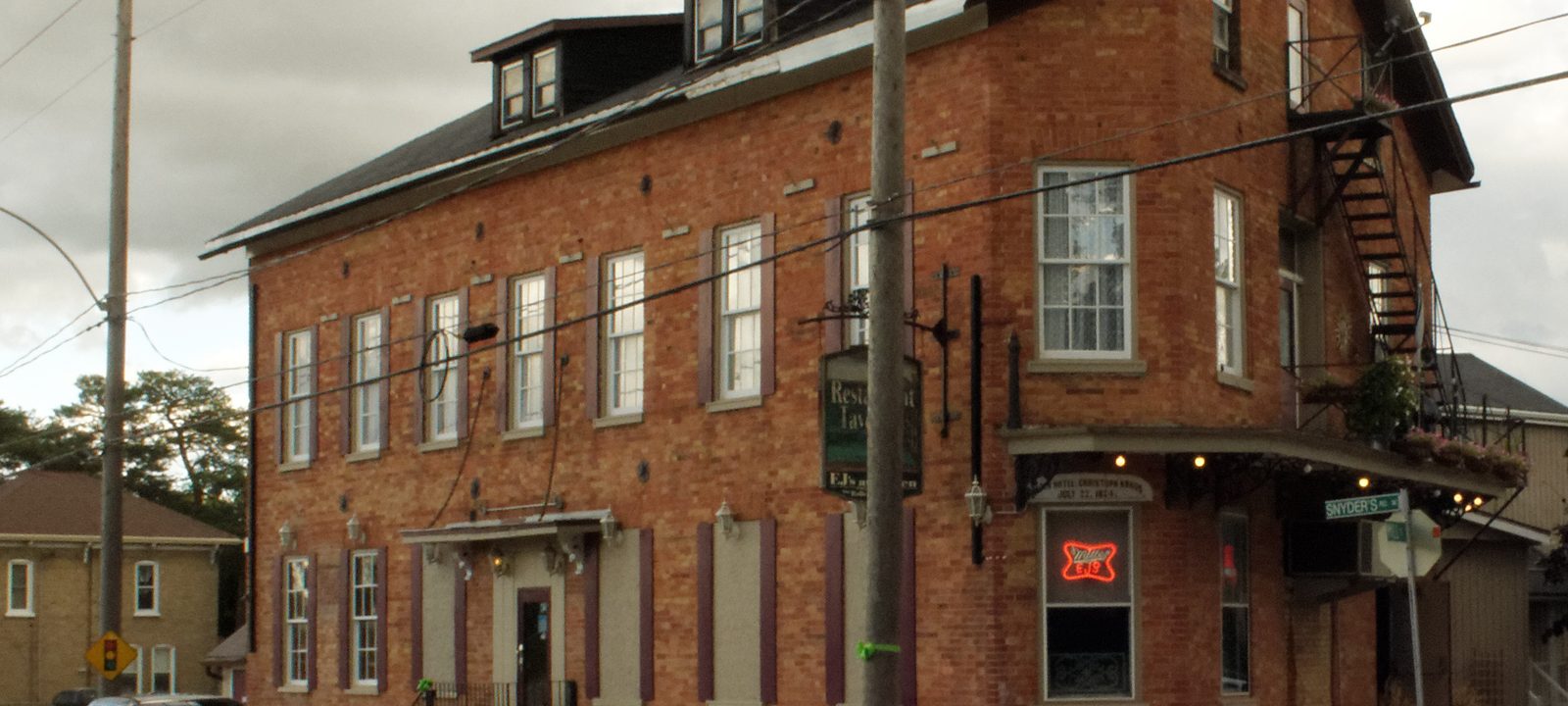
The red brick Baden Hotel, a three storey nineteenth century building on a street corner in Baden
The Baden Hotel, at the centre of the village.
Photo: Mac Armstrong, CC BY-SA 3.0

Below the hills

Baden

Baden was named in 1854 by Jacob Beck, who came from the Grand Duchy of Baden in Germany. His son, Sir Adam Beck, was born here and went on to champion public hydroelectric power in Ontario. There is a park named for him in the village, and an elementary school too.

Castle Kilbride, the Italianate mansion built in 1877 for James Livingston, whose linseed oil business made him rich, is Baden’s landmark. Wilmot Township bought and restored it in 1993, it became a National Historic Site in 1994, and the township offices and council chamber are in an addition beside it. The Prime Ministers Path statue park is on the grounds next door.

The Baden Tower stands on one of the Baden Hills above the village and carries television and radio signals for Kitchener. Waterloo-Oxford District Secondary School is just outside Baden on Snyder’s Road West. Foxwood, a public golf course on Erb’s Road near Baden, has three nines and was built in 1983.

The east end

Petersburg and St. Agatha

St. Agatha was first called Wilmot, and it was renamed in 1852 after its Catholic church. Lutherans and Catholics both formed congregations here in 1834, and the Amish Mennonites built their meeting house in 1885. In 1865 the Funcken brothers, both priests, started St. Jerome’s College in the village before moving it to Berlin, now Kitchener, the following year. About 450 people lived here in 2021.

Petersburg is a small village a little south of St. Agatha. Both are only a few minutes from the shopping at the Boardwalk and the west end of Waterloo. Rebel Creek, a public golf course with wetlands and steep changes in elevation, is on Snyder’s Road East at Petersburg.

The south end

New Dundee and the south

The southern part of Wilmot is quieter farm country. New Dundee is a small village near the township’s southern edge, close to the Kitchener line, and Mannheim sits close to the Kitchener line. Dundee Golf Club, a public golf course in New Dundee, has been open since 1970.

Old settlements across the township are marked with heritage signs, among them Holland Mills, Josephsburg, New Prussia, Rosebank, and the crossroads of Punkeydoodles Corners, which Wilmot shares with its neighbours.

Sources

We wrote this guide from the public sources listed here, and checked each place against them. Neighbourhood names follow local usage, the streets named are examples rather than boundaries, and the marks on the map are approximate. Details such as school boundaries, zoning, and transit routes change, so please check anything important with the municipality or the school board.